


Our methods for smoother skin
We use only evidence-based and clinical techniques for mechanical skin exfoliation, carried out using sterile equipment.
Clinical Dermaplaning
Unlike dermaplaning at home using a simple eyebrow razor or dermaplaning razor, our skincare therapists use a sterile, surgical dermaplaning blade. This is gently drawn across the skin at a precise angle to shave away the very outermost layer of dead skin cells and fine hairs.
Gentle approach
A fundamental principle when performing mechanical exfoliation is our deep respect for the skin’s natural barrier. By occasionally preparing the skin with a specific facial oil or a moisturising dermaplaning spray, we ensure that the blade glides completely friction-free over the tissue. This clinical and controlled approach protects the healthy, underlying tissue (epidermis), minimises the risk of micro-injuries and guarantees a process that is both smooth and gentle.
A clinic full of expertise
Handling a surgical instrument close to the contours of the face requires extensive anatomical knowledge and a steady hand. At The Faculty in Stockholm, your facial treatment is carried out exclusively by specially trained skincare therapists and registered nurses. We never compromise on sterility or medical hygiene standards. This ensures you receive a professional experience, completely free from the risks associated with using a dermaplaning tool yourself.
Price for a dermaplaning treatment
The cost of your treatment depends on whether it is carried out on its own or combined with deep-acting chemical stimulation for extra radiance. During your consultation, you will always be given a fully transparent and binding quote.
Dermaplaning / Glow facial
1 500
Consultation
0

Pre-treatment consultation
The first step is to book an initial consultation with one of our skincare therapists. We will carry out a clinical assessment of your skin condition and ensure that your skin barrier can tolerate a mechanical peel. You will receive factual information about the procedure, how we avoid any potential side effects, and what results you can expect.
You will receive a specific treatment proposal based on your body. After the consultation, you have a statutory reflection period of at least 48 hours to decide in peace and quiet whether you want to give your consent.


Dermaplaning
Step by step
We follow a rigorous clinical process from diagnosis to recovery, designed to maximise effectiveness and ensure your safety.
Consultation
Medical assessment and choice of method
You will meet with our skin therapist for an in-depth analysis of your skin barrier. We will carefully review your skin type and health declaration to rule out any active inflammation, such as severe acne, which may present a medical contraindication for mechanical exfoliation.
Before your treatment
Preparations for safe treatment
It is important that you stop using any strong acids (AHAs/BHAs) and retinol for at least five days before your appointment. Your skin must not be over-exfoliated, thin or irritated when we begin the mechanical scraping, in order to avoid chemical hypersensitivity.
The day of treatment
Safe care at the clinic
On the day of the treatment, we begin with a double cleanse to remove all traces of make-up, oils and impurities from the face. The skin is gently disinfected, and a specific skincare oil or barrier spray is sometimes applied to optimise the glide of the surgical blade over the tissue.
Recovery & healing
Self-care and convalescence guidelines
Immediately after exfoliation, the skin’s ability to absorb products is at its peak. We immediately apply highly concentrated serums and soothing moisturising masks packed with antioxidants. Finally, a repairing cream and a high SPF sunscreen are applied to protect the newly exposed skin.
Monitoring & results
Medical check-up and final assessment
The treatment requires no recovery time and usually takes around 45 minutes. However, your skin will be particularly sensitive to UV light, which is why sun protection is a strict medical requirement. To maintain the results, we generally recommend repeating the procedure every four to six weeks, in line with the skin’s natural cell renewal cycle.
Our skincare therapists
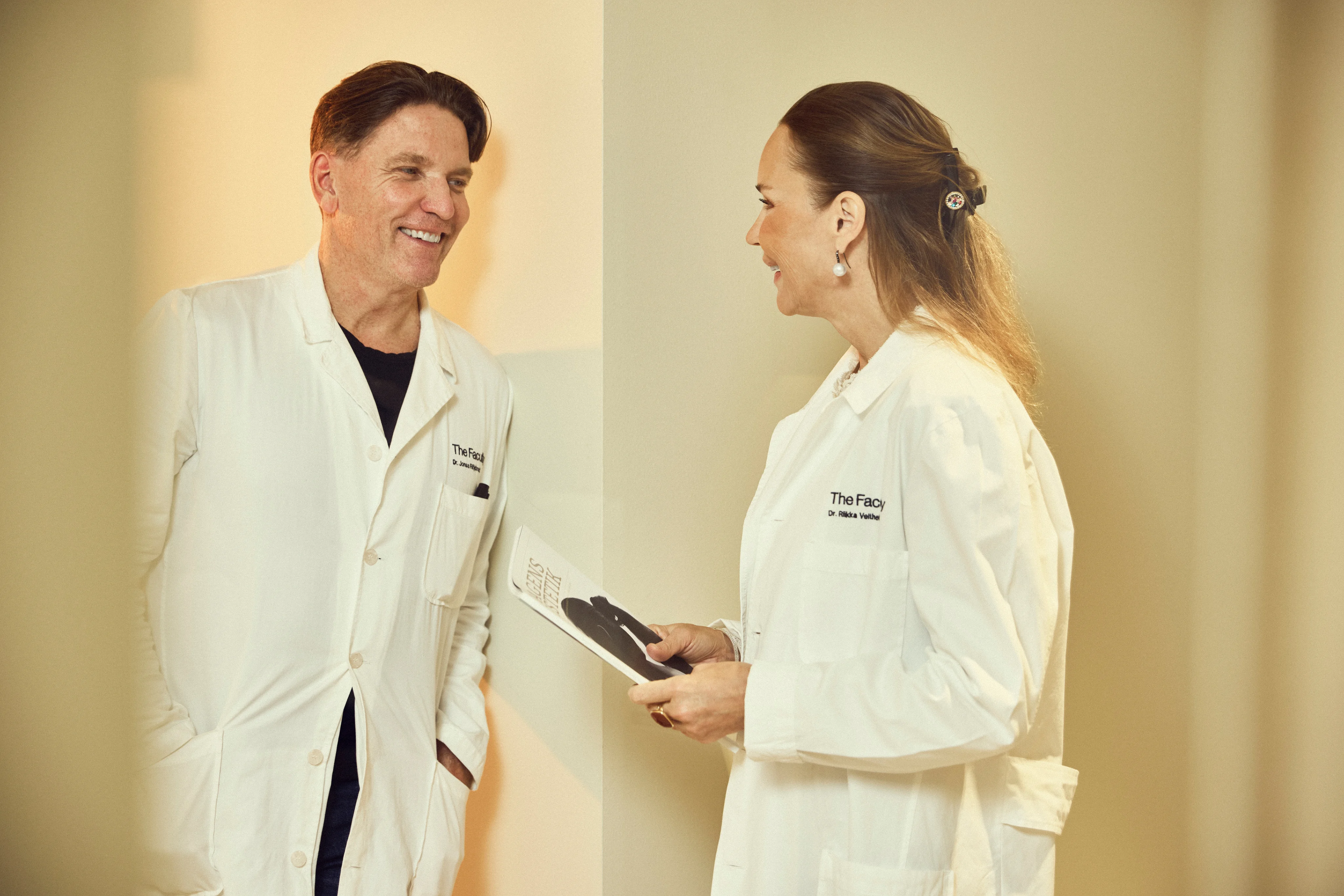
When you visit The Faculty, you will be looked after by registered nurses and qualified skincare therapists with extensive clinical experience. Our staff have undergone rigorous training, and often a specific dermaplaning course, to guarantee the very highest precision. Their in-depth understanding of dermatology is your greatest assurance during the procedure.






Who can undergo the treatment?
This method is an excellent option for healthy individuals over the age of 18 who are looking for a chemical-free treatment to restore their skin’s radiance. It is also a safe option for pregnant or breastfeeding women. However, we strongly advise against the procedure if you have active acne, rosacea in flare-ups, inflamed skin or very coarse, dark terminal hair on the face (for example, in cases of PCOS), as the friction can seriously aggravate these conditions.



Our clinics
At The Faculty, medical expertise meets a welcoming atmosphere. At Hangövägen 20, you will find our custom-built clinic, designed to meet strict clinical standards for hygiene and safety. For injection treatments and skincare, we welcome you to our walk-in clinic at Humlegårdsgatan 14 in Östermalm. Our practice is guided by a scientific approach and extensive experience, creating a safe and transparent treatment journey.


Payment guarantee and insurance
We make sure you receive clear information about every aspect of your treatment, including the exact cost. As a patient of a formally registered healthcare provider, you are automatically covered by the relevant patient insurance. For those who wish, there is also the option to spread your payments through our secure financing partners.




Frequently asked questions about facial shaving and radiance
Frequently asked questions and answers about shaving and skin radiance
Is it good or bad for a woman to shave her face? (shaving the face: good or bad for women)
From a dermatological perspective, it is neither dangerous nor physiologically harmful for a woman to shave her face, provided that the skin barrier is intact and the procedure is carried out in a clinical setting. It is an effective method of exfoliation. However, it is directly harmful if done on active acne, as the blade risks spreading bacteria and tearing open superficial inflammations, which can lead to scarring.
Will my hair grow back darker or thicker?
No, this is a common and widespread anatomical myth. Cutting a hair at the skin’s surface has absolutely no effect on the hair follicle’s root, the number of hair follicles, or your genetics. Your vellus hair will grow back with exactly the same colour, density and rate as before. However, the cut, blunt edge of the hair may make it feel slightly rougher initially as it breaks through the skin.
What are the risks of doing dermaplaning at home? (dermaplaning at home)
We strongly advise against doing this yourself using a top-rated cosmetic dermaplaning blade or cheap eyebrow razors (for women shaving their faces at home). These shop-bought blades are rarely sharp or sterile enough. There is a high risk that you will ‘tear’ the tissue rather than making a clean cut, which significantly increases the risk of micro-injuries, ingrown hairs, bacterial infections and a severely compromised skin barrier.
Which products should I use after the treatment? (facial shaving products for women)
In the days following a dermaplaning treatment, your skin is highly receptive but also particularly vulnerable. You should use only gentle, moisturising and barrier-strengthening products, ideally containing ingredients such as hyaluronic acid and ceramides. Completely avoid active acids, vitamin C and retinol for about a week. A broad-spectrum sunscreen (SPF 50) is also an absolute medical requirement, regardless of the weather.
How often should a woman shave her face to maintain a healthy glow? (how often should a woman shave her face)
To maintain the results safely, we recommend repeating the procedure every four to six weeks. This follows the skin’s natural biological cell renewal cycle. Scraping the skin more frequently than this risks thinning the epidermis too much and may cause chronic redness or inflammation.
Can the treatment tighten the skin or reduce wrinkles?
No. This method works exclusively on the very outermost layer of the skin. It gives a fantastic glow and an extremely smooth surface, but it does not stimulate the production of new collagen deep within the dermis. If you are looking for structural tightening, we recommend mechanical heat treatments such as Sofwave or radiofrequency instead.
Does it take a long time to do, and how long does it take to recover?
The treatment at the clinic usually takes between 30 and 45 minutes, depending on which moisturising masks we include in the treatment plan. As the technique is superficial and gentle, there is no actual recovery time; you can usually return to work straight away, although your skin may be slightly pink for a few hours.
